บุชุที่ 5 จาก 20 · にょう · ซ้ายและล่าง
辶 しんにょう: เคลื่อนที่
Moving, roads, and distance: going, coming back, near and far.
เป็นบุชุของคันจิ 24 ตัว จาก 1026 ตัวที่เรียนในโรงเรียนประถมญี่ปุ่น
字源 · ทำไมเป็นรูปนี้
จากภาพวาดสู่ 辶
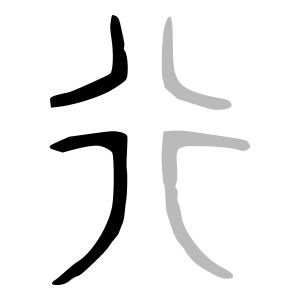 อักษรสำริด 金文
ราว 1000 ปีก่อน ค.ศ.- 彳ปัจจุบัน
a step on a road

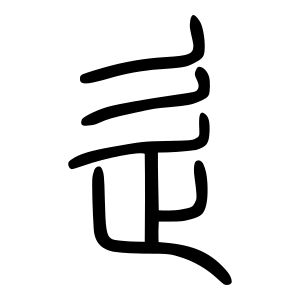 อักษรตราประทับ 篆書
ราว 220 ปีก่อน ค.ศ.- 辵ปัจจุบัน
the two together

รูปอักษรโบราณ: แสดงตัวอย่างที่พบจริงอย่างละหนึ่งแบบ จาก Ancient Chinese characters project บน Wikimedia Commons (สาธารณสมบัติ) รูปร่างต่างกันมากตามยุคสมัยและสถานที่ แตะที่ภาพเพื่อดูแหล่งที่มา
- 1. The picture
Two older pictures put together: 彳, a step along a road, and 止, a foot. Together they mean walking along a road.
- 2. Brushed into a curve
Writers with brushes ran the strokes together into one quick wave. It now wraps around the left side and bottom of the kanji.
ที่มาของตัวอักษรอิงตามคำอธิบายที่สอนกันทั่วไป หากนักวิชาการเห็นต่างกัน เราจะบอกไว้
ครอบครัวนี้เกี่ยวกับอะไร
Moving, roads, and distance: going, coming back, near and far.
- 道road-way
- 近near
- 遠distant
- 送escort
เมื่อคำใบ้ใช้ไม่ได้
A few are about choosing or leaving rather than walking.
- 選elect
- 遺bequeath
ครอบครัว 辶 แยกตามชั้นเรียน
คันจิระดับประถมทุกตัวที่อยู่ในบุชุ 辶 แตะที่ตัวอักษรเพื่อดูความหมาย (ภาษาอังกฤษ)
ป.2小2 · 5
通
traffic, pass through近
near, early道
road-way, street週
week遠
distant, far
ป.3小3 · 7
進
advance, proceed運
carry, luck送
escort, send追
chase, drive away速
quick, fast返
return, answer遊
play
ป.4小4 · 4
連
take along, lead選
elect, select辺
environs, boundary達
accomplished, reach
ป.5小5 · 6
過
overdo, exceed述
mention, state造
create, make適
suitable, occasional逆
inverted, reverse迷
astray, be perplexed
ป.6小6 · 2
退
retreat, withdraw遺
bequeath, leave behind
ครอบครัว: คันจิที่มีบุชุแบบดั้งเดิมใน KANJIDIC2 เป็น 辵 (ลำดับที่ 162) KANJIDIC2 © EDRDG, CC BY-SA 4.0