Radical 5 de 20 · にょう · izquierda y abajo
辶 しんにょう: movimiento
Moving, roads, and distance: going, coming back, near and far.
Encabeza 24 de los 1026 kanji que se enseñan en la primaria japonesa.
字源 · POR QUÉ ESTA FORMA
De un dibujo a 辶
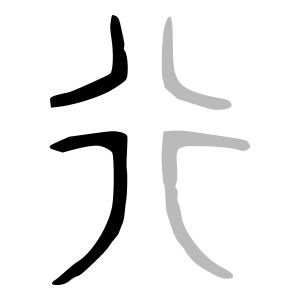 Bronce 金文
h. 1000 a. C.- 彳Hoy
a step on a road

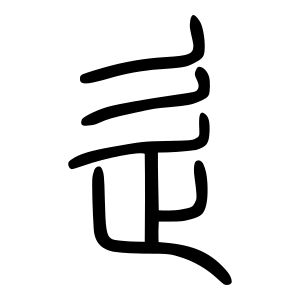 Sello 篆書
h. 220 a. C.- 辵Hoy
the two together

Formas antiguas: un ejemplo documentado de cada una, del Ancient Chinese characters project de Wikimedia Commons (dominio público). Las formas variaban mucho según la época y el lugar. Toca una imagen para ver su fuente.
- 1. The picture
Two older pictures put together: 彳, a step along a road, and 止, a foot. Together they mean walking along a road.
- 2. Brushed into a curve
Writers with brushes ran the strokes together into one quick wave. It now wraps around the left side and bottom of the kanji.
Los orígenes siguen las explicaciones que se enseñan habitualmente. Cuando los especialistas no están de acuerdo, lo decimos.
De qué trata la familia
Moving, roads, and distance: going, coming back, near and far.
- 道road-way
- 近near
- 遠distant
- 送escort
Cuando la pista falla
A few are about choosing or leaving rather than walking.
- 選elect
- 遺bequeath
La familia de 辶, curso por curso
Todos los kanji de primaria clasificados bajo 辶. Toca uno para ver su significado (en inglés).
2.º curso小2 · 5
通
traffic, pass through近
near, early道
road-way, street週
week遠
distant, far
3.º curso小3 · 7
進
advance, proceed運
carry, luck送
escort, send追
chase, drive away速
quick, fast返
return, answer遊
play
4.º curso小4 · 4
連
take along, lead選
elect, select辺
environs, boundary達
accomplished, reach
5.º curso小5 · 6
過
overdo, exceed述
mention, state造
create, make適
suitable, occasional逆
inverted, reverse迷
astray, be perplexed
6.º curso小6 · 2
退
retreat, withdraw遺
bequeath, leave behind
Familia: kanji cuyo radical clásico en KANJIDIC2 es 辵 (n.º 162). KANJIDIC2 © EDRDG, CC BY-SA 4.0.