Clé 8 sur 20 · へん · gauche
言 ごんべん: paroles
Speech and language: talking, reading, writing down, counting out loud.
Elle regroupe 34 des 1026 kanji appris à l’école primaire au Japon.
字源 · POURQUOI CETTE FORME
D’un dessin à 言
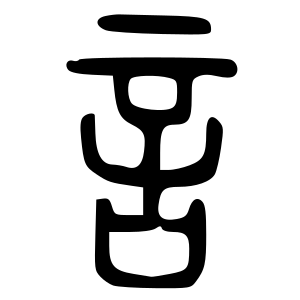 Sceau 篆書
v. 220 av. J.-C.- 言Aujourd’hui

Formes anciennes : un exemple attesté pour chacune, tiré du Ancient Chinese characters project sur Wikimedia Commons (domaine public). Les formes variaient beaucoup selon l’époque et le lieu. Touchez une image pour voir sa source.
- 1. The picture
A mouth 口 at the bottom, with lines rising above it. They are usually read as words coming out. Scholars disagree on exactly what the top part first showed.
- 2. Squeezed to the left
On the left it keeps all its strokes and just gets thinner. Look at 話 and 語.
Les origines suivent les explications couramment enseignées. Quand les spécialistes ne sont pas d’accord, nous le disons.
Ce que la famille a en commun
Speech and language: talking, reading, writing down, counting out loud.
- 話tale
- 語word
- 読read
- 記scribe
Quand l’indice ne marche pas
This is one of the most reliable radicals. Almost every member is about words in some way.
La famille de 言, année par année
Tous les kanji de l’école primaire classés sous 言. Touchez-en un pour voir son sens (en anglais).
2ᵉ année小2 · 6
言
say, word話
tale, talk記
scribe, account計
plot, plan語
word, speech読
read
3ᵉ année小3 · 3
調
tune, tone談
discuss, talk詩
poem, poetry
4ᵉ année小4 · 5
議
deliberation, consultation説
opinion, theory試
test, try課
chapter, lesson訓
instruction, Japanese character reading
5ᵉ année小5 · 8
設
establishment, provision証
evidence, proof護
safeguard, protect評
evaluate, criticism識
discriminating, know講
lecture, club許
permit, approve謝
apologize, thank
6ᵉ année小6 · 12
認
acknowledge, witness論
argument, discourse警
admonish, commandment訪
call on, visit討
chastise, attack諸
various, many誌
document, records誕
nativity, be born訳
translate, reason誠
sincerity, admonish誤
mistake, err詞
part of speech, words
Famille : kanji dont la clé classique dans KANJIDIC2 est 言 (nº 149). KANJIDIC2 © EDRDG, CC BY-SA 4.0.