บุชุที่ 8 จาก 20 · へん · ซ้าย
言 ごんべん: คำพูด
Speech and language: talking, reading, writing down, counting out loud.
เป็นบุชุของคันจิ 34 ตัว จาก 1026 ตัวที่เรียนในโรงเรียนประถมญี่ปุ่น
字源 · ทำไมเป็นรูปนี้
จากภาพวาดสู่ 言
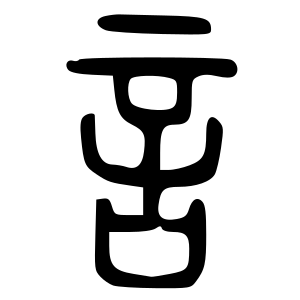 อักษรตราประทับ 篆書
ราว 220 ปีก่อน ค.ศ.- 言ปัจจุบัน

รูปอักษรโบราณ: แสดงตัวอย่างที่พบจริงอย่างละหนึ่งแบบ จาก Ancient Chinese characters project บน Wikimedia Commons (สาธารณสมบัติ) รูปร่างต่างกันมากตามยุคสมัยและสถานที่ แตะที่ภาพเพื่อดูแหล่งที่มา
- 1. The picture
A mouth 口 at the bottom, with lines rising above it. They are usually read as words coming out. Scholars disagree on exactly what the top part first showed.
- 2. Squeezed to the left
On the left it keeps all its strokes and just gets thinner. Look at 話 and 語.
ที่มาของตัวอักษรอิงตามคำอธิบายที่สอนกันทั่วไป หากนักวิชาการเห็นต่างกัน เราจะบอกไว้
ครอบครัวนี้เกี่ยวกับอะไร
Speech and language: talking, reading, writing down, counting out loud.
- 話tale
- 語word
- 読read
- 記scribe
เมื่อคำใบ้ใช้ไม่ได้
This is one of the most reliable radicals. Almost every member is about words in some way.
ครอบครัว 言 แยกตามชั้นเรียน
คันจิระดับประถมทุกตัวที่อยู่ในบุชุ 言 แตะที่ตัวอักษรเพื่อดูความหมาย (ภาษาอังกฤษ)
ป.2小2 · 6
言
say, word話
tale, talk記
scribe, account計
plot, plan語
word, speech読
read
ป.3小3 · 3
調
tune, tone談
discuss, talk詩
poem, poetry
ป.4小4 · 5
議
deliberation, consultation説
opinion, theory試
test, try課
chapter, lesson訓
instruction, Japanese character reading
ป.5小5 · 8
設
establishment, provision証
evidence, proof護
safeguard, protect評
evaluate, criticism識
discriminating, know講
lecture, club許
permit, approve謝
apologize, thank
ป.6小6 · 12
認
acknowledge, witness論
argument, discourse警
admonish, commandment訪
call on, visit討
chastise, attack諸
various, many誌
document, records誕
nativity, be born訳
translate, reason誠
sincerity, admonish誤
mistake, err詞
part of speech, words
ครอบครัว: คันจิที่มีบุชุแบบดั้งเดิมใน KANJIDIC2 เป็น 言 (ลำดับที่ 149) KANJIDIC2 © EDRDG, CC BY-SA 4.0