Klucz 2 z 20 · へん · lewa strona
木 きへん: drzewo
Trees, wood, and things made of wood.
Należy do niego 48 z 1026 kanji, których uczy się w japońskiej szkole podstawowej.
字源 · SKĄD TEN KSZTAŁT
Od rysunku do 木
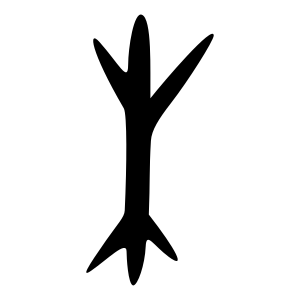 Kości wróżebne 甲骨文
ok. 1200 p.n.e.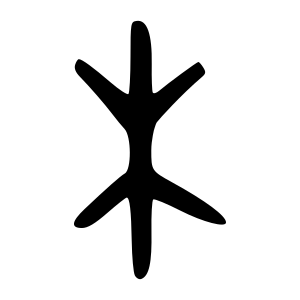 Brąz 金文
ok. 1000 p.n.e.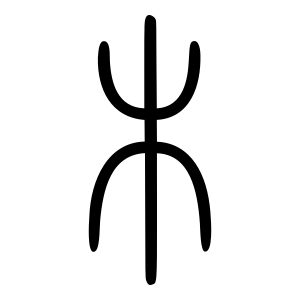 Pieczęć 篆書
ok. 220 p.n.e.- 木Dziś


Dawne formy: po jednym potwierdzonym przykładzie z Ancient Chinese characters project w Wikimedia Commons (domena publiczna). Kształty bardzo się różniły w zależności od epoki i miejsca. Dotknij obrazka, aby zobaczyć źródło.
- 1. The picture
A tree: the horizontal line is the branches, the vertical line is the trunk, and the two strokes going down are the roots spreading into the ground.
- 2. Squeezed to the left
On the left side, the last stroke on the right shrinks to a short flick so it doesn’t bump into its neighbour. Look at 村 and 校.
Pochodzenie znaków podajemy według powszechnie nauczanych wyjaśnień. Gdy badacze się spierają, piszemy o tym.
O czym jest ta rodzina
Trees, wood, and things made of wood.
- 林grove
- 板plank
- 橋bridge
- 柱pillar
Kiedy podpowiedź zawodzi
Some very common kanji are filed under 木 but are no longer about trees.
- 本book
- 東east
- 来come
Rodzina 木, klasa po klasie
Wszystkie kanji ze szkoły podstawowej z kluczem 木. Dotknij znaku, aby zobaczyć jego znaczenie (po angielsku).
Klasa 1小1 · 6
本
book, present村
village, town校
exam, school木
tree, wood森
forest, woods林
grove, forest
Klasa 2小2 · 3
東
east来
come, due楽
music, comfort
Klasa 3小3 · 8
業
business, vocation横
sideways, side様
Esq., way橋
bridge根
root, radical植
plant板
plank, board柱
pillar, post
Klasa 4小4 · 16
機
loom, mechanism案
plan, suggestion果
fruit, reward末
end, close極
extreme, pole松
pine tree材
lumber, log未
un-, not yet標
signpost, seal束
bundle, sheaf栄
flourish, prosperity札
tag, paper money梅
plum械
contraption, fetter梨
pear tree栃
horse chestnut, (kokuji)
Klasa 5小5 · 7
査
investigate格
status, rank検
examination, investigate構
posture, stance条
article, clause桜
cherry枝
bough, branch
Klasa 6小6 · 8
権
authority, power株
stocks, stump模
imitation, copy染
dye, color枚
sheet of..., counter for flat thin objects or sheets樹
timber, trees棒
rod, stick机
desk, table
Rodzina: kanji, których klasycznym kluczem w KANJIDIC2 jest 木 (nr 75). KANJIDIC2 © EDRDG, CC BY-SA 4.0.