Radikal 2 von 20 · へん · links
木 きへん: Baum
Trees, wood, and things made of wood.
Steht an der Spitze von 48 der 1026 Kanji, die an japanischen Grundschulen gelernt werden.
字源 · WARUM DIESE FORM
Vom Bild zu 木
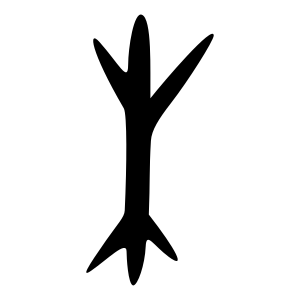 Orakelknochen 甲骨文
um 1200 v. Chr.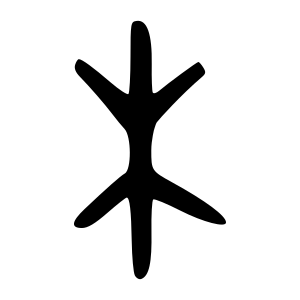 Bronze 金文
um 1000 v. Chr.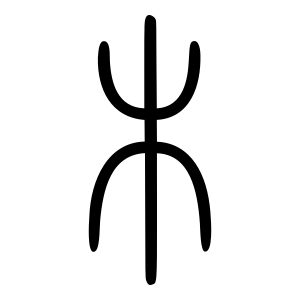 Siegel 篆書
um 220 v. Chr.- 木Heute


Alte Formen: je ein belegtes Beispiel aus dem Ancient Chinese characters project auf Wikimedia Commons (gemeinfrei). Die Formen unterschieden sich je nach Zeit und Ort stark. Tippe auf ein Bild, um die Quelle zu sehen.
- 1. The picture
A tree: the horizontal line is the branches, the vertical line is the trunk, and the two strokes going down are the roots spreading into the ground.
- 2. Squeezed to the left
On the left side, the last stroke on the right shrinks to a short flick so it doesn’t bump into its neighbour. Look at 村 and 校.
Die Herkunft folgt den üblichen Erklärungen. Wo sich die Fachleute nicht einig sind, sagen wir es.
Worum es in der Familie geht
Trees, wood, and things made of wood.
- 林grove
- 板plank
- 橋bridge
- 柱pillar
Wenn der Hinweis nicht hilft
Some very common kanji are filed under 木 but are no longer about trees.
- 本book
- 東east
- 来come
Die 木-Familie, Klasse für Klasse
Alle Grundschul-Kanji unter 木. Tippe auf eines, um die Bedeutung (auf Englisch) zu sehen.
Klasse 1小1 · 6
本
book, present村
village, town校
exam, school木
tree, wood森
forest, woods林
grove, forest
Klasse 2小2 · 3
東
east来
come, due楽
music, comfort
Klasse 3小3 · 8
業
business, vocation横
sideways, side様
Esq., way橋
bridge根
root, radical植
plant板
plank, board柱
pillar, post
Klasse 4小4 · 16
機
loom, mechanism案
plan, suggestion果
fruit, reward末
end, close極
extreme, pole松
pine tree材
lumber, log未
un-, not yet標
signpost, seal束
bundle, sheaf栄
flourish, prosperity札
tag, paper money梅
plum械
contraption, fetter梨
pear tree栃
horse chestnut, (kokuji)
Klasse 5小5 · 7
査
investigate格
status, rank検
examination, investigate構
posture, stance条
article, clause桜
cherry枝
bough, branch
Klasse 6小6 · 8
権
authority, power株
stocks, stump模
imitation, copy染
dye, color枚
sheet of..., counter for flat thin objects or sheets樹
timber, trees棒
rod, stick机
desk, table
Familie: Kanji, deren klassisches Radikal in KANJIDIC2 木 ist (Nr. 75). KANJIDIC2 © EDRDG, CC BY-SA 4.0.